
Meet a Founder: How Aria Ma Is Bridging Traditional Chinese Medicine and Modern Healthcare
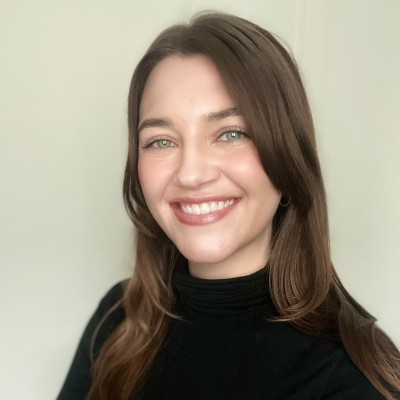
Boston is well known as a healthcare mecca: we have world-class universities, teaching hospitals, and a prominent biotech scene. But what many don't realize is that Boston also hosts a vibrant community of traditional Chinese medicine practitioners that is incredibly impactful. Aria Ma grew up with Chinese immigrant parents and saw a clear gap at the intersection of traditional Chinese and western medicines. She realized that the problem wasn’t necessarily spatial or financial access to traditional medicines when western failed to work: it was a lack of understanding, and therefore a lack of public awareness to traditional Chinese medicine’s potential.
Aria Ma was studied biopsychology at Tufts and was on pre-med track before pivoting her career to found her company, Jadewell. In her words: “I speak two languages: Chinese Herbal Medicine, and science. Jadewell is the translation.” In providing quality-sourced traditional Chinese medicines through Jadewell’s platform, she seeks to not only deliver relief to patients but also to empower them to think through their needs by communicating the benefits of different formulas in a clear, approachable way. Every patient is also supervised by a licensed traditional Chinese medicine practitioner, who can adjust their formulas monthly as needed.
In this interview, I sat down with Aria to discuss her inspiration for Jadewell, how her education in biomedical research informs her company’s foundation, and how she keeps it all together.
Interview Transcript: Aria Ma, Founder of Jadewell
This transcript has been lightly edited for clarity and readability while preserving the original conversation.
[00:01] Linda Waller
Hi everyone, welcome to Startup Boston! I'm Linda Waller, and I write our monthly Meet a Founder series, which we've now expanded into video interviews.
For our first video interview, I'm joined by Aria Ma, founder of Jadewell.
Aria has been featured in the Boston Business Journal's 25 Under 25, she's a TEDx speaker, and she recently graduated from Tufts University with a dual degree in biopsychology and studio art.
Aria, welcome! I'm excited to learn more about your journey as a founder.
To kick things off, could you share some background on how you came up with Jadewell and what led you to commit to building the company?
[00:57] Aria Ma
I came into Tufts on the pre-med track. I did all the pre-med things: took the classes, volunteered in Alzheimer's care facilities, conducted biomedical research at the Jackson Laboratory and Washington University in St. Louis, and worked in several hospitals.
During my junior year, I started thinking about my future and what I wanted my work in healthcare to look like.
At that point, I'd been with my partner for about two years. He has a chronic condition called Ehlers-Danlos syndrome, which is a connective tissue disorder that affects his entire body.
He experiences everything from difficulty regulating body temperature and digestive issues to chronic fatigue, chronic pain, and joint pain.
Throughout our relationship, I saw how difficult it was for him to find relief from his symptoms through prescription medications.
I grew up with traditional Chinese medicine, so I suggested that he try Chinese herbal medicine and acupuncture.
Acupuncture really helped him. And when he tried herbal medicine, we started noticing improvements.
He'd previously been misdiagnosed with Crohn's disease for four years. Even after receiving his Ehlers-Danlos diagnosis, his prescription medications weren't helping with many of his symptoms.
Within about two months of taking the herbs, his IBS symptoms and fatigue had improved, and his pain had decreased.
My biomedical research focused on inflammation, so I started thinking about how traditional Chinese herbal medicine, particularly personalized formulas, might help with systemic inflammation.
That sent me down a rabbit hole. There are so many people in this country living with chronic diseases, and there's growing research into the role inflammation plays in many chronic illnesses.
I also started thinking about affordability. My partner had struggled to access traditional Chinese medicine because of the cost.
That's what led me to explore how we could make this medicine more affordable.
Ultimately, I decided not to apply to medical school and founded Jadewell instead.
[03:28] Linda Waller
Increasing access to traditional medicine is so important, especially when conventional Western medicine isn't providing the relief someone needs.
I noticed that Jadewell works with practitioners who review formulas before they're sent to patients.
As a startup founder, you're building something new, and relationships are incredibly important.
How did you find these practitioners and establish trust with them?
[03:58] Aria Ma
I think that's incredibly important, especially when you're an outsider trying to build something new in an industry you don't know much about.
I had a background in medicine and research, and I leaned on that when I started sending cold emails.
But I think the most important thing is understanding community and making sure you're not just extracting knowledge for your own benefit.
The acupuncture and traditional Chinese medicine community is relatively small. Everyone knows everyone.
When I first started reaching out, I was working on a research project for one of my classes. I wanted to understand how traditional Chinese medicine could become more accessible.
This was before I even decided to build Jadewell.
After those initial conversations, I made a point of following up with practitioners a few months later to share what I'd learned.
For example, if one practitioner mentioned a marketing strategy that had worked well for them, I'd share that insight with other practitioners.
It was about giving something back to the community instead of just asking for information.
Over several months, I continued building those relationships.
When we were ready to launch, we onboarded our first community acupuncture partner.
That helped establish credibility and led to introductions to other practitioners who became some of the first practitioners on our platform.
[05:49] Linda Waller
The community aspect is so important.
Speaking of community, Boston gets a lot of attention for being a healthcare mecca. We're a biotech hub, we have incredible research hospitals, and we have elite medical schools.
But much of that attention focuses on conventional Western medicine.
How much of Boston's healthcare ecosystem translates into the traditional medicine space?
Is there a larger traditional Chinese medicine community here that doesn't necessarily receive the same attention?
You mentioned that the community is relatively small, but that doesn't mean it isn't impactful.
[06:27] Aria Ma
Something that might surprise people is that there are hospitals here in Boston with acupuncture clinics operating within them.
Acupuncture and herbal medicine can play a role in helping patients manage symptoms associated with cancer treatment.
Massachusetts General Hospital has offered acupuncture services, and I believe Brigham and Women's Hospital has as well.
I grew up with traditional Chinese medicine.
Instead of always taking over-the-counter cold medicine or pain relievers, my mom would prepare different herbal formulas.
She'd boil the herbs, and honestly, they tasted terrible! I never wanted to drink them.
But when I got to college, I started appreciating them more, especially for managing my energy and day-to-day exhaustion.
Today, I see my role as a scientist in this industry as a translator.
I create a lot of founder-led content and educational social media content about the intersection of science and traditional Chinese medicine.
I think one of the biggest barriers preventing people from trying traditional Chinese medicine is that they don't know where to start or understand why it might help them.
When you talk to practitioners or see content online, you'll often hear terms like "qi stagnation" or "liver depletion."
If you're familiar with traditional Chinese medicine, those terms might mean something to you.
But if you're not, they can sound unfamiliar or confusing. The knowledge is so vast that it can be difficult for someone to know where to begin.
So instead of just using terms like "qi stagnation," I try to translate those concepts into language people might be more familiar with, such as circulation and inflammation.
For example, I might explain how circulation, metabolic waste, and inflammation relate to certain symptoms.
Someone with arthritis might understand that inflammation contributes to joint pain. In traditional Chinese medicine, a practitioner might describe those symptoms using concepts like qi stagnation.
My role is to help people understand the connection between those different explanations.
Boston has so many amazing scientists and healthcare programs, but I see my role as bridging these two worlds.
Traditional Chinese medicine has its own language, and that language doesn't translate one-to-one into modern science.
However, science can help us explore and understand some of these concepts.
When people can understand traditional Chinese medicine through an educational framework they're already familiar with, they're more open to exploring it for the first time.
[10:11] Linda Waller
Absolutely. I was looking through Jadewell's website, and I was impressed by how clearly the herbal formulas and their intended uses were explained.
It makes everything feel much more approachable, especially for someone who isn't familiar with traditional Chinese medicine terminology.
[10:42] Aria Ma
I've actually been thinking a lot lately about why I approach communication this way.
I think it comes from being a first-generation student.
When I was younger, I translated a lot for my parents. They immigrated from China, and English wasn't their first language. It wasn't mine either.
I was constantly thinking about how to explain things in simpler terms that people could understand.
I think my brain is wired to approach communication that way.
My background in science reinforced that.
At university, we learned a lot about science communication: presenting research papers, explaining findings, and understanding your audience.
A big part of my job today is science communication.
How can you explain something in a way that people understand without making them feel talked down to because they don't have a particular educational background?
And how do you make that education accessible enough that people feel empowered to research and understand things on their own?
I don't want people to have to rely on me as their translator forever.
One of the biggest goals at Jadewell is to empower people with the knowledge they need to make the best healthcare decisions for themselves.
[12:06] Linda Waller
That's such an important point.
You're increasing access not just to herbal formulas in terms of affordability, but also to the knowledge behind them.
You're helping people understand their options and giving them a place to start.
I'd love to shift gears and talk about your personal journey as a founder.
Starting a company right out of college is a big adjustment. Suddenly, you don't have the structure of a nine-to-five job or a school schedule.
How do you organize your days, make sure everything gets done, and avoid burnout?
[13:11] Aria Ma
That's so real!
I've actually had the same planning routine since middle school, and it's worked for me ever since.
Every Sunday, I use Apple's Reminders app to plan out my week.
I use Apple devices, so everything syncs across them. I plan out what I need to accomplish each day and cross-reference my meetings to make sure everything fits.
If another meeting gets added, I update my reminders so I have a clear picture of what each day looks like.
Over the years, I've also figured out how to structure my day to improve my motivation.
I like starting with easy, low-effort tasks to build momentum.
Then I move into more difficult work in the middle of the day and save longer projects that might take multiple days for later.
I also make sure I have time to go to the gym.
I used to compete in powerlifting competitions, which was really fun and rewarding. I've scaled back on that training, but exercise is still important for my well-being.
Yoga and meditation have also become a big part of my routine. I try to practice yoga about twice a week, either at a studio or at home.
Since graduating in May, I've been working full-time on Jadewell.
One thing I've discovered is that I really enjoy working late at night.
Sometimes I'm working 12- to 14-hour days, and honestly, I love it.
But I've also had to learn when to stop.
As a founder, your to-do list can actually get longer throughout the day. You start working on one thing, and suddenly ten other things come up that need your attention.
I've learned to set milestones for myself, similar to how I approached long-term assignments in college.
Sometimes I have to recognize that it's 6 p.m., I've barely eaten lunch, and I need to take a break.
My partner has been really helpful in reminding me to manage my time and energy.
Building a company is a marathon. You can't burn yourself out.
I also make time to hang out with friends, spend time with my partner, and be with my pets. I have three cats and a dog!
The reality is that the founder's task list never ends.
You have to give yourself grace, set milestones, and figure out what motivates you.
As a solo founder, that's especially important.
It's probably different when you have cofounders, but at the end of the day, I'm the person responsible for pushing myself forward.
My patients motivate me, but I also have to hold myself accountable.
You need to understand what will burn you out, what will keep you motivated, and how to structure your day in a way that works for you.
That's how you keep the marathon going.
[17:10] Linda Waller
I completely relate to that.
I experienced pretty serious burnout a few years ago because I just kept going without stopping.
Now, I've learned to stop working when there isn't anything urgent that absolutely needs to get done.
I've found that if I end the day while I still have some motivation left, I'm much more excited to start working again the next morning.
It's almost about having the discipline to know when to stop.
[17:44] Aria Ma
Absolutely.
Something else I've found helpful is preparing for the next day before you finish working.
Even when you're feeling burnt out at the end of the day, taking a little time to think about what you need to accomplish tomorrow can make a big difference.
It's about asking yourself, "What can I do right now to set myself up for success tomorrow?"
Then, when you start working the next day, everything feels more efficient.
I think about it similarly to planning for the future of a company.
When you're developing a strategy for where your business should be in two or five years, you're thinking about what actions you need to take today to get there.
I apply that same mindset to my daily routine.
If you're able to plan ahead, you can often prevent problems before they happen.
[18:36] Linda Waller
Exactly. It's preventative, but it's also motivating.
Having that North Star helps you stay focused, avoid unnecessary distractions, and keep moving in the right direction.
As we wrap up, what's next for Jadewell?
Are you thinking about fundraising, focusing on customer growth, or working toward other milestones?
[19:03] Aria Ma
I've been reading a book called Ready, Fire, Aim: Zero to $100 Million in No Time Flat by Michael Masterson.
I'm about halfway through, and it's really changed how I think about priorities and building a company.
One of the biggest ideas in the book is that, as a founder, your job is to always be selling.
You should constantly ask yourself, "What am I doing today that's helping us reach more customers?"
How are you increasing your customer base every day and every week?
That's become a big focus for me.
We've started onboarding interns, and we're bringing on more people to help lighten my workload.
That gives me more time to focus on long-term strategy, content creation, and building workflows that help us reach more customers without relying on paid advertising.
We're also exploring fundraising, although I can't share too much about that just yet.
There are a lot of exciting things happening over the next few months.
We're working toward several milestones, and I'll be sharing updates on LinkedIn.
[20:43] Linda Waller
That's so exciting! We'll definitely be keeping an eye on what you and Jadewell accomplish next.
Thank you so much for joining us and sharing your journey. It was great chatting with you!
[20:58] Aria Ma
Thank you so much, Linda! It was great chatting with you, too.


