How Rose Huang is Streamlining Medical Device Regulatory Clearance with Accelidea
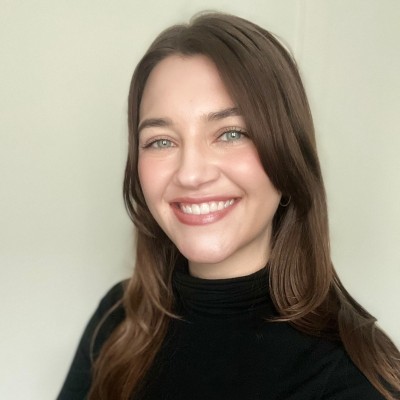
It’s no secret that the FDA regulatory process can slow down innovation in the medical device industry. New technology can be held up for years before reaching approval and the patients it was built to serve. Rose Huang spent her career helping medical device companies navigate the regulatory process and witnessed firsthand how slow, complex, and fragmented the development process could be. She also saw how much opportunity there was to streamline the process– an insight that became the foundation of her startup, Accelidea.
In our conversation, Rose shares how her engineering background, consulting work, and journey as a solo founder has helped further her mission: ensuring that no patient has to wait years for a technology that could save their life.
Startup Boston (SB): Can you tell us a bit about your background and how you came up with the idea for Accelidea?
Rose Huang (RH): Sure! I started out as a biomedical engineer at Carnegie Mellon and Johns Hopkins, and my first startup was a spin out from my Johns Hopkins master’s. My thesis was centered around the development of a device to detect preterm labor.
I then went into the industry as an operator within a medical device company, where I helped bring a class II medical device from concept to FDA clearance in nine months. The industry average was closer to four years.
By year 4, this product had already helped over 130,000 patients, and the company also made over $26 million in accelerated revenue. It was like, win, win, win, win! (laughs)
So that made me ask the question: if it can be done in nine months, why does it usually take four years? What is the blocker? Nobody gets into medical device for ease and fun, there’s always a mission. We want to help save lives, but why does it take so long?
I then started working for companies and managing their global programs across California, Belgium, Italy, Taiwan, all at the same time, and that’s where I started to understand the problem: one product or engineering decision potentially impacts all the other 15 functions within an organization. This includes risk management, regulatory, quality, clinical, etc.
All the people, all the teams, across different processes, different time zones, different ways of working, different cultures, have to come together and try to realign every so often. And every time, while you’re trying to align something, something else can easily become misaligned. So, I was helping these companies from within trying to fix that problem.
SB: It sounds like dealing with these inefficiencies on such a constant basis gave you a very nuanced understanding of the development process. To all of us on the outside, Accelidea makes complete sense as the natural culmination of your career so far. But what gave you the conviction to go for it?
RH: While I was working at these other companies, I started to think, “maybe other people have figured it out, it’s just that this particular company hasn’t.”
And the fastest way for me to validate that thesis was to start my own consulting company to see what was out there, as a next step. That’s when I started a consulting company here in Boston in 2018, with startup clients as well as Fortune 500 global medical enterprise customers.
With consulting I was able to see, one: that this problem exists in all medical device companies, not just startups. Even the big guys with millions of dollars are suffering the same pain point. And two: these companies were willing to pay me as a consultant to help fix that problem. That led me believe there was an opportunity here to use my knowledge to help more companies at the same time, instead of working inside companies one at a time.
From there, I started trying to find a way to turn my 20-device launch experience into a scalable software platform that could help multiple companies. That’s how I had the idea for Accelidea.
On the personal side, I was also a cancer survivor and saw firsthand how time is of the essence for patients. Our company mission is that no patient should wait years for the technology that could save their life. Everybody goes into the medical device industry for specific reasons, and we work really hard for it. So we need to find a way to keep it from being dragged it down.
Consulting was a means to an end, and I was using that as my way to validate the market. I was making sure there was customer demand and people were willing to pay for it while I continued to make a living for myself. It became a full-time job, so I used that to figure out IP and do things to reduce a lot of Accelidea’s risk upfront without worrying about fundraising for a while.
SB: So inspiring! You’ve also started this company on your own. How has being a solo founder shaped your journey, and have you considered a co-founder?
RH: I wasn’t a solo founder by choice in the beginning; I had so many folks that I would have wanted to co-found this with. But this wasn’t a startup right out of graduating school, so when I had the idea to start this company, folks my age had just had a baby, bought a new house, and were at a stage where they weren’t willing to take that height of risk in their careers.
Investors and a lot of other folks would say I needed a technical co-founder, because I’m not a software engineer by training. So I was looking for a technical co-founder, but I didn’t pause my company to do that because there were a lot of other signs that there was customer demand, market pull, and AI was kind of just starting at that time.
I looked for a co-founder in parallel to building my company. I had the founder capital and the domain expertise, I knew where I was going, I just needed to find folks who could help me execute certain parts of it. And the more progress I made, the less a co-founder became a need or demand, because the company was founded already.
So then the problem was not so much finding a co-founder as much as finding a way to de-risk that single point of failure in terms of the company. There’s always the risk that something could happen to me and the company would be down, which is why having a team is important. So my focus has switched to finding the right team to go hand-in-hand with, not so much a co-founder anymore.
My founding engineer was also a solo founder in the same co-working space. We actually have now launched a solo founder community, [One of One], so that solo founders can help each other and give each other guidance on what free resources are out there, finding solo founder friendly programs, and what to practically address when talking to an investor.
I will say that being a solo founder has advantages. I can make the strategic decision that I believe is best for the company, and I save a lot of time not having to discuss back and forth with a co-founder or asking if we should pivot. We haven’t pivoted; we just have to execute in the way that things needs to be done. So it has pros and cons…but I don’t have to have alignment meetings every day!
SB: It’s interesting that the longer you looked for a co-founder, the less a co-founder became necessary. And One of One is a great concept for giving back to the Boston startup community. Speaking of, what has made Boston the right place for you to build Accelidea?
RH: I definitely want to shout out Venture Lane. Christian [Magel] is the founder of Venture Lane, and he really took me under his wing when I was just starting out. He showed me how to start my network, find events, and had a place for me to work.
Techstars Boston is also fantastic. I bootstrapped my way until I got into Techstars, and they traditionally focus a lot on teams, so it felt really good to get accepted as a solo founder. I met the most phenomenal mentor group over there.
SBUR is another small community that is relatively new, and they do founder-to-founder connections; I’ve met a lot of founders in that community. Obviously a shout out to Startup Boston, Steph is fantastic. I’ve gone to their events every year.
And then CIC and AI-specific coworking spaces have been helpful too.
For Boston’s focus on healthcare and med tech, I think it’s one of the best in the country, so it’s natural that a lot of these startup resources have a lot to offer in those verticals.
SB: All fantastic programs, and it’s great that you’ve been so active in participating. What’s next for Accelidea?
We’ve just brought on our founding engineer and founding head of engineering, so right now our priority is execution and scaling. Medical device companies want what we're building, and are waiting for it, so it's time for us to deliver and demonstrate the value of how we can help them, in terms of the time and money that we can save them. So that’s next: executing! If any medical device companies in the Boston area want to talk, we would love to be in contact. Regulatory CROs as well, because our goal is to empower them to do their job faster. We would love to talk.
For Rose, Accelidea is a product of both hard-earned industry insight and intelligent foresight in recognizing AI’s potential to streamline device development. As Accelidea grows its team and begins scaling, her journey reflects a larger truth to what makes a successful startup: meaningful innovation often begins with founders who have lived the problem closely enough to know exactly what needs to change.
About the author: Linda Waller is the founder/CEO of EPIGO, a medical device startup building a compact injector for people with allergies. Formerly the founding hire at the equestrian media company Horse Network, she enjoys bringing her love of writing and storytelling to the Startup Boston community. You can connect with her on LinkedIn.