Meet a Founder: How Zoe Watson is Elevating Microbiome Research
Gastrointestinal issues are incredibly prevalent in the United States, with some surveys suggesting that up to two-thirds of Americans experience some sort of digestive symptoms.
Moreover, millions suffer from chronic issues that stem from Celiac Disease, IBS, etc. The road to diagnosis is often long and complex, and most diagnostic sampling of the digestive tract relies on the end of the colon. This limitation leaves other parts of the GI tract unexplored for answers, such as the small intestine, which is difficult to access.
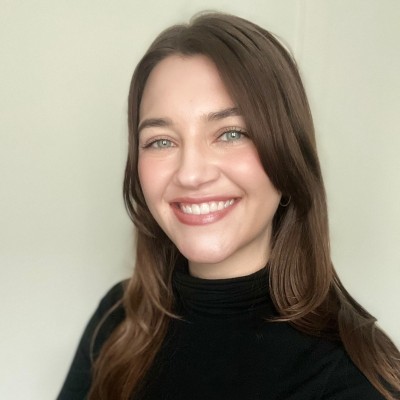
Zoe Watson, along with her co-founder Sofia Paschenti, has co-founded Microvitality, a company focused on the innovation of a smart capsule that allows for precise, non-invasive sampling of the small intestine. Zoe’s bachelor’s degree in biomedical engineering from Union College, followed by a Master’s in Science, Innovation and Management from Tufts has put her in a seamless position to lead the company.
I was excited to chat with her about Microvitality and her experience building this startup right out of graduate school.
Startup Boston (SB): Can you walk us through how you got your start with Microvitality, and how you and your co-founder (Sofia Paschenti) found each other?
Zoe Watson (ZW): Yeah! So, the story of how we got started: I had studied biomedical engineering at Union College, and my co-founder, Sofia, had studied business management at King’s College in London. We both ended up dabbling in startups actually, in our early career years. I had a brief stint at an MIT spinout focused o a wearable device for pharma, and Sofia had worked in a startup for social impact.
When we started the program at Tufts, Sofia and I were put randomly in a group, and I was going through my own personal GI journey at the time. My sister had also been diagnosed with celiac disease, which is currently a symptom-based diagnosis. I was seeing how much she was spending on supplements and on her own testing, and how complex it is in the U.S. to get testing done. It’s sort of a trial-and-error process.
Our group started ideating and had the realization that when something happens with GI, it’s all-consuming. It affects going out with friends, your work, what you’re eating, how you’re working out, and what you’re talking about with your close friends and family members. In grad school, this was happening with me, with my sister, and with my best friend. These were the first pieces of Microvitality.
We were then introduced to the tech transfer office, and among other projects, they presented Dr. Sameer Sonkusale’s ingestible capsule technology. I immediately knew I had to speak with him – it seemed perfect and like it could be the answer for celiac patients.
Through conversations it later became evident that we’re not able to collect tissue with this generation of the product, but we are collecting a luminal sample. I started to research and learn about the gut microbiome and what you can get from a fluid sample of the upper GI. And actually, there’s a lot you can tell from the fluid in this region of the gastrointestinal tract, so it’s immediately applicable for IBS patients and SIBO patients.
In 2024 we incorporated. In 2025, we officially pulled the IP out, so we did the licensing deal with Tufts. So, that is how Microvitality started!
I didn’t go into Tufts thinking I was going to found a startup, but we worked on the project for two years and decided to [pursue it after graduating.] It was our decision to commit to it and go as far as we could. It came from so much personal tie to it, and we just kept making progress. I think especially because we have close friends and family, and our own challenges with diagnosis and treatment - that is what pushes us forward.
SB: It’s awesome you found Sofia right off the bat and were able to see your compatibility from the beginning. How do you two divide responsibilities and steer the company together?
I am extremely lucky to have Sofia as my cofounder. On the project level before incorporating, we were able to understand how each other works.
As the two women in the group, we also had that extra layer of understanding with one another, and we just kept supporting each other in our strengths and recognizing our weaknesses. We are in a long-term relationship as cofounders, and of course there are challenging moments and doubts, but we really respect each other’s time and communicate well. When we see something, we’ll ping each other. If there are notes from a meeting that I wasn’t able to attend, for whatever reason, we are very thorough in keeping everyone involved.
In terms of decision-making, when we incorporated, we had to decide who was going to be in the CEO position and who would be the COO. I remember it being really intimidating because we respect each other as equals, and we still do.
But for governance reasons and building the company, we had to have someone in each role. We said, “Okay, we’re going to create a medical device company, so we’ll put the engineer in that position.” I’m a little more outgoing, and I’m good at networking and building relationships, so it felt like a very natural path. But I’m definitely not making decisions without her, or vice versa. We’re there for each other.
SB: On this note of working as a team, what was the first thing that you had your interns do for you and how did it go, trusting them to do it?
For us, the two interns we’re working with this summer approached the company and asked if there was any way they could help.
I was trained as an engineer, but it’s a very different set of skills to delegate as a leader and understand what to let go, especially because Sofia and I have been doing this for 2-3 years. What we found really helpful was setting very clear expectations about the role: time frame, hours, hybrid expectations, which days are in-person and which days are virtual. Both of our interns are very early in their careers.
The first real project for them was customer discovery questions. We participated in the NSF I-Corps program. One afternoon, I needed to get a few more interviews, and I said, “Alright, we need some interviews for NSF by tomorrow, so let’s interview each other to mock it and see how this goes.”
We taught them how I interview people, and then we went down to the common. It’s a tricky thing to approach people and start asking them about personal things such as gut health. But both interns were able to successfully get 5-10 interviews each over the hour, and they were able to distill and summarize pieces that we wanted to get more information around. I was really proud of that. Even though it had nothing to do with what they were interns for, it was like, “Okay, that market research was successful.” I think it really helped them understand what Sofia and I are doing, as well.
At this early stage, there is still a lot to be discovered in terms of the business model, pricing, and who will pay. I think they have a better understanding now of why we are a little popcorn-like in our meetings.
SB: You mentioned to me before that you’ve got a couple different jobs to support yourself while pursuing Microvitality. Time management is so important. How do you prioritize what needs to get done, have self-care, and avoid burnout?
This is a totally valid question! It was what I was asking when deciding if I should do this startup and if it made sense for me. Even the decision to incorporate was a conversation I had with my parents, my sister, my boyfriend, and even my roommates. I asked my roommates if I could move into the smaller room and pay a little bit less, and started asking myself where I could cut down here and there. I also started teaching yoga and cleaning at the studio. That was my way of saying, “Okay, I know that going to yoga helps me a lot mentally, but how am I going to creatively be able to afford this?” I work a seasonal job on the weekends at a restaurant, too, and that’s really helpful to make it by financially. I started running as well, because other than shoes, it’s free.
In terms of time management, if Sofia or I need to do something, we can put a block into our calendar, totally unexplained. If it’s a full day, we’ll share why that is, but there is no expectation for this to be everything you eat, sleep, and breathe. We’re not paying ourselves full-time and we’re trying to be realistic for the long run here.
Leaning on other founder community members is also totally key. A lot of the challenges that you feel, someone else feels. It’s totally valid to be upset and to feel frustrated. The highs are so high, and the lows are so low...it’s really a mental thing, too. You are the one looking at what you’re doing and thinking, “I haven’t made progress,” but you need to take the time to celebrate the wins.
Sofia and I started a quarterly newsletter, and that was really helpful because it was a good checklist of - what have we done, and what is coming next? We had this long laundry list of things and realized we should be proud. I think that’s helped us with time management and also with appreciating that, of course, you want things to move fast and for capital to be infused for growth. But if we don’t have capital, what else can we be doing with the resources we have? You compare yourself to other companies that pitch, but there is no right, there is no wrong, and there is no timeline. Things aren’t going to go your way, and it’s going to be okay.
SB: So many great tips in here. To our last question: What’s next for Microvitality? What kind of milestones are you hoping to hit, or looking forward to?
The big thing now is that we’re starting Auxilium’s Accelerator program this summer. We are still at our space in LabCentral, and we are actively recruiting for our first engineer to start in the fall. We’re doing some scale-up manufacturing work as well and looking to do some micro molding.
We’re also working with our mentors for fully defined development planning before we go out and spend. It seems counterintuitive because it feels like we’ve been planning for the last two years, but we just did a shift in our beachhead through the NSF program. We’re looking at selling into functional medicine: basically positioning the capsule as a home test as a quasi-direct-to-consumer version of the technology. We’re also taking another look at how the regulatory pathway overlays with our testing strategy. That’s our immediate thing: working with our mentors through all this planning and hopefully closing our $1M pre-seed round.
Zoe is building with the kind of creativity, persistence, and self-attunement that is essential for successful founders. Her journey is also a reminder that startups endure when the mission is personal. Zoe’s passion for microbiome health stems not only from her own needs, but from the needs of her family and friends. As Microvitality moves toward closing it’s pre-seed round, she is right on the cusp of helping so many others.
Stay in the loop on everything happening across the Greater Boston startup ecosystem by subscribing to the Startup Boston newsletter below!
About the author: Linda Waller is the founder/CEO of EPIGO, a medical device startup building a compact injector for people with allergies. Formerly the founding hire at the equestrian media company Horse Network, she enjoys bringing her love of writing and storytelling to the Startup Boston community. You can connect with her on LinkedIn.