Meet a Founder: How Mary Delaney Is Modernizing Supply Chains with Tamarin AI
It’s easy to picture a company buying raw materials and distributing products into stores, but getting a product into a customer’s hands is much more complex. Procurement is a given company’s process of specifying needs, evaluating suppliers, negotiating contracts and more, before anything is purchased.
On top of that, companies have to manage their supply chains, which includes manufacturing, assembly, warehousing, and delivery. All of this creates and involves huge amounts of data that can be difficult to handle, so many companies rely on outside agents or buyers. The problem is that the legacy systems these agents use are often clunky, leading to bad decisions, wasted capital, and general inefficiency.
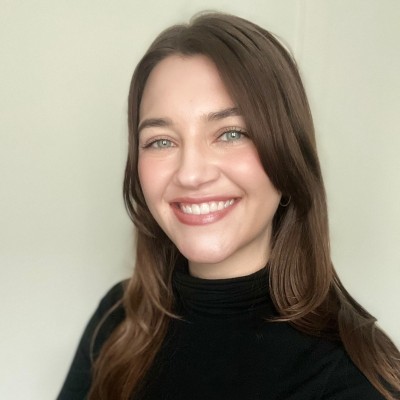
Enter Mary Delaney, CEO and co-founder of Tamarin AI. Her background as associate partner at McKinsey & Co. gave her a clear view of how procurement is evolving in scope, and the potential for AI to streamline procurement data for agents. Seeing opportunity for innovation, she decided to start her own company, Tamarin AI. The company has had exciting growth over the past two years, and I sat down to chat with her about her journey.
Startup Boston (SB): Can you give us some background on Tamarin AI and the problem you’re aiming to solve?
MD: Sure! I'm the co-founder and CEO of Tamarin AI, and we’re reimagining the future of procurement in an AI-first way. We aspire to be the layer that sits between legacy systems and agents. We translate, categorize and normalize data so that agents can use it and get reliable results.
While that layer is our initial product, we’re starting to add agentic workflows such as analytics and strategy setting as well, all primarily with an eye towards enterprise manufacturing. The vast majority of companies’ cost is their procured raw materials, and we’re helping them source those materials at a lower price, and potentially with lower supply chain risk and environmental impact.
We’re empowering the procurement function, which is chronically under-resourced.
SB: This is so technical, and so important. Helping companies improve their procurement would ultimately benefit all of us if they can reduce costly inefficiencies and improve their sustainability. How did you come up with the idea for Tamarin AI, and decide to pivot to it full-time?
MD: Before founding Tamarin I was at McKinsey for about eight years, and I left as an associate partner. While I was there, especially during Covid-19, I saw the mandates on the procurement supply chain expand rapidly from being just about cost takeout to also being about resiliency. I saw all of these places that companies had historically sourced from getting shut down, cut off, or becoming significantly more expensive.
That has continued into this very tariff-heavy era where companies are trying to make sure they have agile supply chains that can adapt to changing geopolitical events. Additionally, in the last 5-10 years there has been a big consumer focus on sustainability that is pushing companies to consider their environmental impacts.
So, the scope of procurement ballooned but the resources and the number of people did not. I was seeing that change in companies’ focus and needs, as well as the crappy data coming out of legacy systems, while also seeing what was coming down the pipe with AI.
In theory, AI has the potential to solve a lot of these problems, but I could see the limitations it would run up against with a lot of the existing systems and data. So I said, “How can how can I help to bridge that gap?” And that's where Tamarin came from.
It honestly felt like a “now or never” confluence of events and this very natural intersection that is only going be here for a certain period of time. Somebody needed to jump on it.
SB: This is such a good take on the importance of foresight within the context of a startup’s industry, as well as timing. How did you find your co-founder, Nathan Spielberg? And how do you think through problems together?
MD: Nathan and I were classmates at MIT, and we didn't really know each other but we had a lot of mutual friends. So that instilled trust early on that he was a good person and we would work together well.
After MIT he had done a PhD at Stanford with a focus on autonomous race cars, which is really deep in AI and machine learning. He’s been in the AI space since around 2015, so he felt like the perfect partner to complement my knowledge and skills. After I left McKinsey I was looking for a co-founder, and I came to him with this idea to build a company together.
I'm the CEO and he's the CTO, and we come at problems with very different backgrounds and skill sets. Nathan owns all of the technical decisions – it’s 1000% his wheelhouse.
Similarly, I largely own the go-to-market, commercial, and business operations side, and then we jointly own the product strategy. As he's gotten more exposure to our customers, he's been able to come up with some really interesting ideas that I would have never thought about too. So, he kind of joined me on the road map and then on either side of it we've got our own little swim lanes.
SB: As you and Nathan build Tamarin, there is so much new technology that is coming out in the AI space, rapidly and constantly. How do you stay grounded in your mission without letting the noise of everything else distract you?
MD: It’s a really good question. The noise to signal ratio in the AI world is so high, and some of it is really valuable. Nathan is thinking about what's going on from a tech perspective and I have an ear to the ground on the customer and competitor side of the world. We sync up every week to say “Does this technology fit into our product, and how?”
For a new piece of technology to make its way onto our road map it needs to clear both Nathan's bar of being safe and secure from a technical perspective, and then my bar of further differentiating us and meaningfully solving our customers problems. And when it hits both of those bars, only then do we think about incorporating it onto the road map.
The world is changing fast too; it's incredible how quickly we can build now compared to even 6 months ago. If we’re worried we missed the boat on something, we can wait just a couple weeks, as opposed to a couple years, to see how that technology plays out and then go back and incorporate it. So that staves off the temptation to integrate anything and everything into what we're building right now.
SB: It’s true, the speed of how things are changing can feel overwhelming but also has an upside that way. As you've been working on this company as a founder, what are some things you have learned or you wish you knew earlier?
MD: I've learned a ton. In a broad sense, I’ve learned to have the confidence to assert that I have the right answer, based on inklings and what I know. Building the confidence to act on those instincts when nobody has done this before, and nobody is going to tell you what to do, is something that I’m still learning.
More specifically, something I learned the hard way was narrowing down on an ICP (Ideal Customer Profile). There is a lot of temptation to find thousands of companies you’re relevant to. While in theory a wide net sounds attractive, it’s not actually that practical. What you really need to get off the ground is just a couple of companies, so don’t be afraid to be too narrow.
Along with that, being flexible and creative on early commercial models is important. The paradigm for a long time in the enterprise SAAS (Software as a Service) world was to never give your product away for free. But the value of working with customers and learning from their testimony is worth more than any amount of dollar, so taking that to heart with those first early customers to get in the door is so important.
The last thing I would say, is to just be comfortable with saying no to opportunities that kind of fit, but not really. Everything that you don't say no to, you are by default saying yes to, and that can lead you in a bunch of divergent directions.
So narrowing in on what exactly you’re trying to do and then saying no to anything that doesn't look exactly like it, is discipline that’s difficult to have but that makes a huge difference in getting that early traction.
SB: Narrowing your focus is definitely a through-line here, whether it’s your core customer or any new tech and features to integrate. To bring us home, what has made Boston the right place to build Tamarin?
MD: I grew up right outside of Boston in Winchester, and I've lived here my whole life. So a piece of me says Boston is a great place to build because Boston is a great place to live! But I do think there are some things that structurally make the city a really compelling place to build.
The most obvious one is the talent that's here, through the universities and to some extent the companies here. Even if our venture community is not as robust as somewhere like San Francisco, in Boston there is enough of the finance, the talent, the tech - there's enough of each thing to make the city work.
And one thing here that stems from the research institutions and universities, is a kind of a seriousness. The companies that I've seen here tend to be built on real value, not on hype. There's a culture of substance that permeates the ecosystem that I really appreciate.
Boston is a relational city too, in a way that I don't think New York or San Francisco really is. In those cities it’s really easy to get into the loop because it’s a transient population, but if you left and came back five years later, you start from square one.
Boston, at least in my experience both from a founder’s perspective and socially, is in many ways the total opposite. It can be kind of hard to break in here and to build trust and find your community, but once you're in, you're in.
For us, as an early-stage startup, so much of what we’re selling is ourselves and the trust that we can deliver. We’re building in the enterprise space and trying to sell to these big companies, and I think that the Boston ecosystem is very conducive to forging high-trust-based relationships that can be hard to build but are built to sustain. This can have pros and cons, but I think it will play out in our favor in the long run.
As Tamarin AI continues to grow, Mary Delaney is building with the fortitude and practicality that defines successful founders. She had the foresight to spot a timely, niche opportunity in AI that connected her expertise in enterprise with her potential as a founder. Her path is also a reminder of Boston’s unique position to fully back the ambitions of its startups: a city with not only the resources to support them, but real relationships as well.
Stay in the loop on everything happening across the Greater Boston startup ecosystem by subscribing to the Startup Boston newsletter below.
About the author: Linda Waller is the founder/CEO of EPIGO, a medical device startup building a compact injector for people with allergies. Formerly the founding hire at the equestrian media company Horse Network, she enjoys bringing her love of writing and storytelling to the Startup Boston community. You can connect with her on LinkedIn.